
Did you know that more than 2 million people are living with sight loss in the UK? We decided to ask Elin Williams, a 21 year old award-winning disability and lifestyle blogger https://myblurredworld.com/ to tell us more about her own experiences and her thoughts on accessible tourism. Elin is a Young Ambassador for the charity VICTA UK, a mentor for LOOK UK, and a Global Brand Leader for the InvisiYouth Charity.

Hi Elin – would you mind telling us a little about your background/story, and your current role as a disability blogger and mentor?
Hello! My name is Elin and I am a writer, blogger and a student with The Open University from North Wales. I have a degenerative eye condition called Retinitis Pigmentosa (RP) which I was diagnosed with when I was six years old, three years after my initial symptoms were noted. I wasn’t initially phased by my disability since I didn’t fully understand it and I presumed that everyone saw the world through blurred and hazy lenses, like me. But as I grew up, I started to sense the weight of the challenges which caused many struggles. However, I’ve always been a positive person and I’ve tried to focus on that positivity as best as I can, it’s my coping mechanism in a way.
My eyesight has deteriorated rapidly over the years, I was registered blind / severely sight impaired when I was twelve. It was all quite overwhelming for me at the time so I turned to Google in search for some reassurance, to no avail. I felt really lonely because of the fact that I couldn’t find many stories from other vision impaired people but when I hit the half-way point of my first year at sixth form, I was growing increasingly interested in the idea of blogging and, after overcoming the initial hesitancy, I decided to create the very platform that I was searching for as a twelve year old, in the hope that it could help someone else in a similar situation.
My Blurred World has continued to grow and evolve from there, I’ve found comfort and fulfilment through writing and I try to use my experiences to help others. I work with charities as much as I can now whether that be through campaigning for charities such as the RNIB or mentoring – something I currently do for LOOK UK. I’ve found a true passion for using my voice to raise awareness, to spread positivity and try to help others so they can feel less alone on their own sight loss journey and I strive to use my writing to create positive changes for the future.
Could you share with us a great holiday experience where holiday accommodation has met your needs really well?
I’ve always gone on holiday with my fully sighted family and friends so I haven’t necessarily needed any specific adaptations since I have them on-hand to help. However, I have had a few hotel getaways with one of my vision impaired friends which were such positive experiences. The hotel staff had good awareness of sight loss and guided us to/from our room or to a nearby restaurant if we needed which put our minds at ease when trying to navigate unfamiliar surroundings.
We didn’t always need their assistance but it was reassuring to us that we knew they were there to help and the fact that they didn’t hold any preconceived ideas made the experience much more positive and inclusive for us since we’re so often met with misconceptions and stereotypical ideas about sight loss.
Could you share some top tips with our owners of ways in which they could make adaptations or changes to their properties which would be helpful to guests with sight loss?
Providing on-site information in an accessible format such as braille or large print can be invaluable to blind and partially sighted guests and it allows us to be more independent in terms of discovering information for ourselves without having to ask someone else for help.
Other adaptions that could prove useful would be having accessible kitchen appliances, for example, it’s possible to have equipment with built-in talking features such as talking microwaves and tactile appliances such as measuring jugs, different coloured chopping boards and a liquid level indicator which proves very helpful for me when I pour hot drinks since it beeps as the water level nears the top of the cup.
I think it’s also important to give as much detail as possible about the property online, which is where so many of us source our information from these days. It’s important to note if a property has a lot of steps and whether they’re steep or not since they can be difficult to navigate at times. Outlining such details allows a vision impaired person to determine whether or not a property is suitable for them or not and it means that there won’t be any nasty surprises when we turn up, so the more information, the better!
Are there any common issues/barriers that travellers with sight loss often or sometimes encounter?
Planning is a huge part of anyone’s holiday, we all love to have a good nosy at what facilities the holiday destination has, what attractions are local etc, etc. But, as a vision impaired person, I always feel like I need to go that one step further in terms of researching and planning a trip. This can prove difficult sometimes if there isn’t accessibility information on websites and it’s even harder if that website isn’t accessible with my screen-reader in the first place.
I think it’s really important to provide a clear outline of accessibility features at a property in order to put blind and partially sighted people’s minds at ease in terms of knowing what is available to us and whether it will be suitable. It takes a lot of stress out of the process of researching which can be really time consuming when vital information isn’t readily available to us.
What future steps would you like to see in the world of accessible tourism?
I think it’s important to recognise that vision impaired people love to travel too and we shouldn’t have to face extra barriers when wanting to do so. Implementing accessibility features means that holidays and tourism can be made more inclusive for everyone.
Some destinations and companies are making positive steps towards this but I’d love to see more places following their lead in the near-future as we aim to make travelling an accessible and positive experience for everyone.
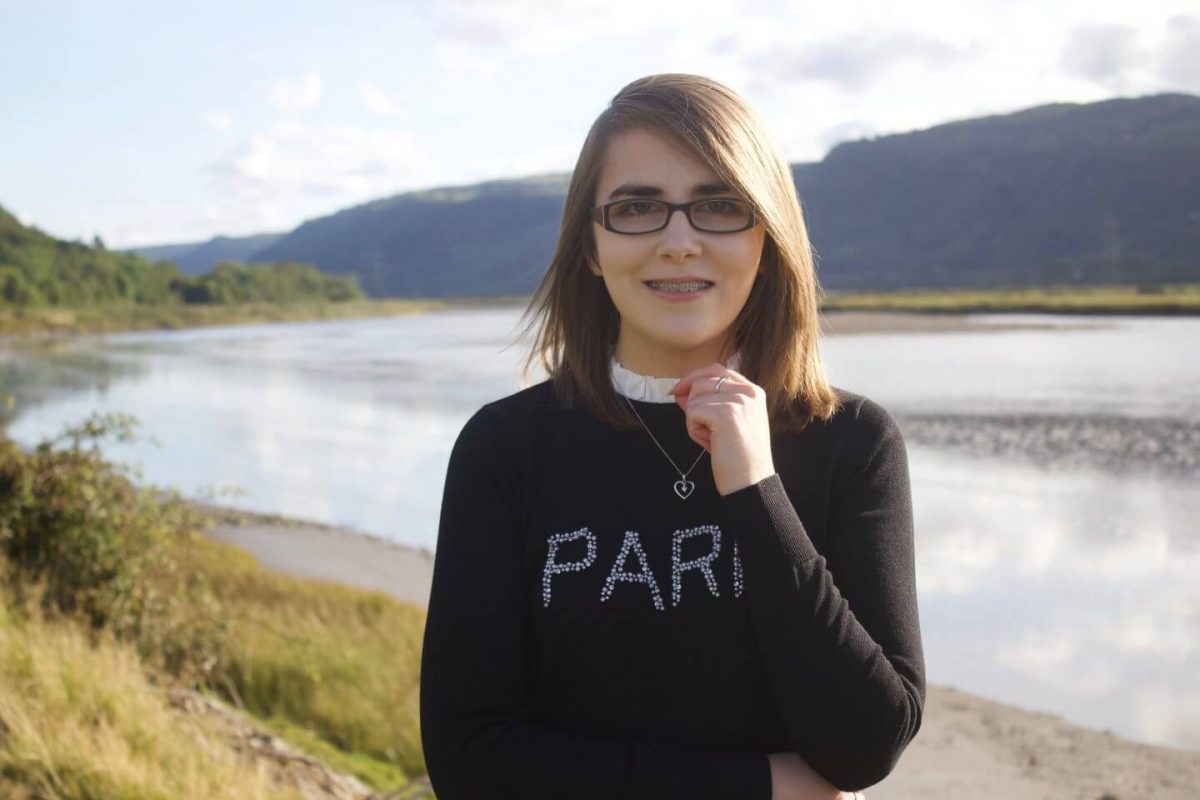
We were absolutely delighted when Elin agreed to share her own experiences around accessible tourism with us, and have found it fascinating to find out more about how holiday accommodation can become more accessible for guests with sight loss. We hope you have found it interesting, don’t forget to comment and let us know what you think!
You can also contact Elin directly – elin@myblurredworld.com.